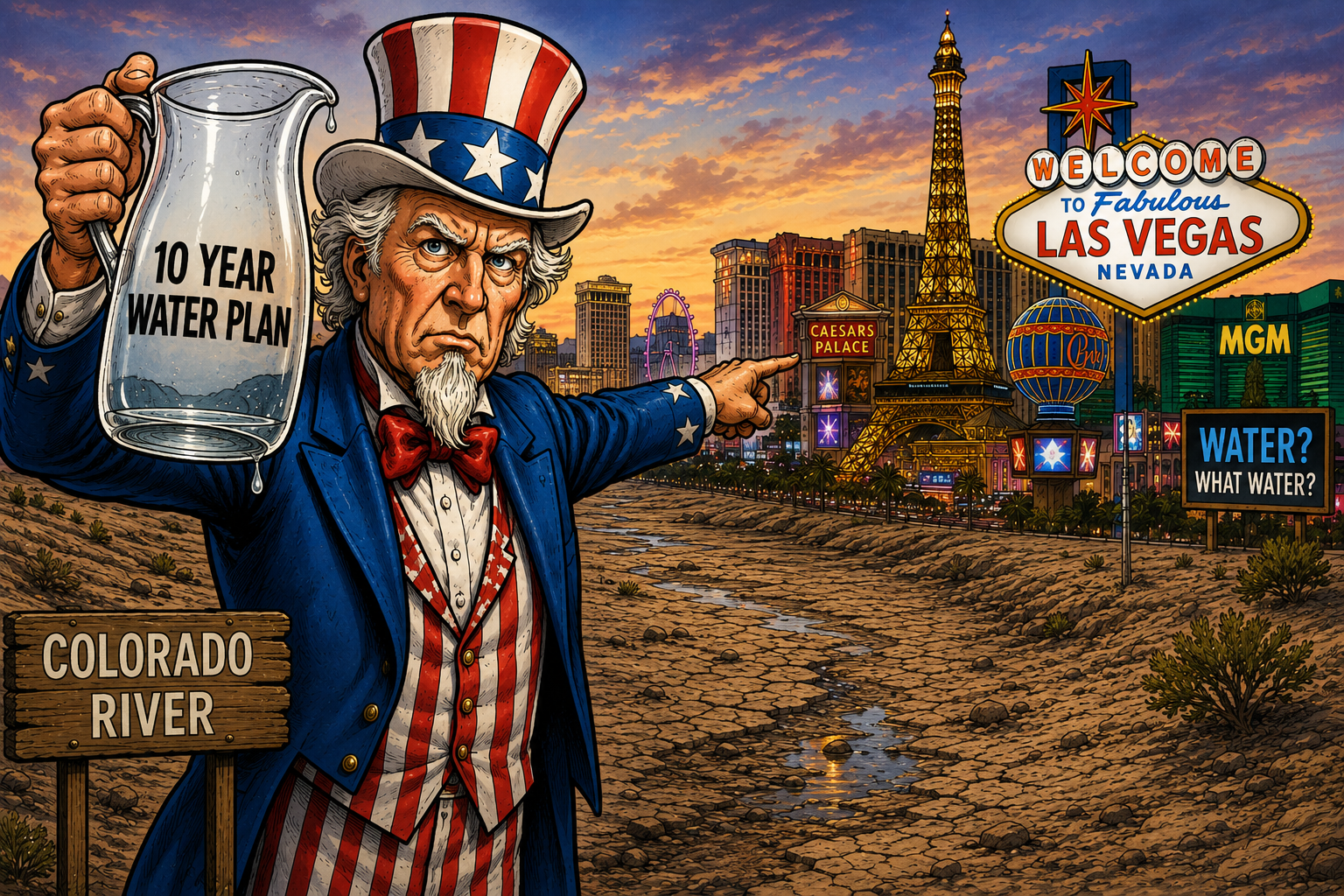
The global water crisis is often described as a future threat. That description is increasingly difficult to defend. Water stress is already affecting cities, farms, industries, ecosystems, national economies, and billions of people. The crisis is not simply that the planet is “running out of water.”
Earth contains an enormous amount of water. The real problem is far more complex:
Humanity is facing increasing pressure on clean, accessible, affordable, reliable freshwater in the places and at the times it is needed.
The following 25 facts illustrate the scale of the challenge.
1. Approximately 2.1 billion people still lack safely managed drinking water.
According to the WHO/UNICEF Joint Monitoring Program, roughly one in four people globally still lack drinking water that meets the standard for being accessible on premises, available when needed, and free from priority contamination.
2. Water scarcity affects every continent.
Water insecurity is no longer confined to traditionally arid regions. Population growth, urbanization, groundwater depletion, pollution, aging infrastructure, and climate variability are increasing pressure across developed and developing economies.
3. Twenty-five countries face extremely high annual water stress.
World Resources Institute analysis indicates that these countries use at least 80% of their available renewable water supply for agriculture, households, and industry.
At that level of utilization, drought or unexpected demand can rapidly become a crisis.
4. Roughly half of the global population experiences severe water scarcity during at least part of the year.
This demonstrates an important reality: annual national averages can conceal intense seasonal shortages.
5. Agriculture accounts for approximately 70% of global freshwater withdrawals.
Food production is therefore central to the water crisis. Growing populations increase both direct demand for drinking water and indirect demand through food.
6. The Middle East and North Africa face extraordinary water stress.
Approximately 83% of the region’s population is exposed to extremely high water stress.
7. South Asia is also under severe pressure.
Approximately 74% of the region’s population is exposed to extremely high water stress.
8. Groundwater depletion is undermining long-term water security.
Groundwater supports municipal systems, agriculture, industry, and ecosystems. In many locations, pumping exceeds natural recharge.
9. Declining groundwater increases economic costs.
As water tables fall, wells may require greater depth and more energy for pumping. This can increase costs for municipalities, industries, households, and farmers.
10. Aquifer damage can persist for generations.
Severe depletion may contribute to land subsidence, reduced storage capacity, water-quality deterioration, and saltwater intrusion.

A wise man once said, ” nobody thinks about water until they open a tap and these is a problem. Even with growing restrictions on water use, we pooh-pooh talks of serious water problems. However, can you imagine living in a world where pets are limited, or even prohibited? Our puppies drink a lot of water. I have heard of stranger measures being imposed. Beware!
11. Climate change is altering the hydrologic cycle.
The consequences can include changing precipitation patterns, altered snowpack, earlier snowmelt, increased evaporation, severe drought, extreme rainfall, and greater uncertainty.
12. Flooding does not guarantee water security.
Intense rainfall can overwhelm infrastructure and rapidly move downstream without replenishing reservoirs or groundwater sufficiently.
13. Glacier retreat threatens natural freshwater storage.
Many river systems depend on seasonal meltwater. Changes in glacier mass can alter the timing and reliability of downstream flows.
14. Sea-level rise threatens coastal groundwater.
Saltwater intrusion can degrade freshwater aquifers, particularly where groundwater is already heavily pumped.
15. Pollution creates economic water scarcity.
A water resource may physically exist but become unsuitable for drinking, agriculture, or industry without advanced treatment.
Contamination can therefore reduce effective water supply.
16. Aging infrastructure wastes treated water.
Leakage and distribution failures can cause significant losses between treatment plants and customers.
17. Urbanization is concentrating water demand.
Growing metropolitan regions require increasing volumes of drinking water while simultaneously generating more wastewater and increasing demand for food, energy, and industrial production.
18. Water scarcity threatens food security.
Reduced irrigation availability can lower agricultural productivity, disrupt crop choices, and contribute to price volatility.
19. Water and energy systems are interdependent.
Water is required for many forms of electricity generation and industrial cooling. Energy is required to pump, treat, transport, desalinate, and recycle water.
20. Industrial production depends on reliable water.
Semiconductor manufacturing, pharmaceuticals, food and beverage production, mining, steel, chemicals, pulp and paper, power generation, and data centers all depend on water.
21. Water scarcity can reduce economic growth.
The World Bank has warned that climate-driven water scarcity could reduce GDP by up to 6% in some regions under adverse scenarios.
22. Water insecurity can contribute to migration.
When agricultural livelihoods collapse, wells decline, and local economies weaken, water stress can become one factor driving displacement.
23. Shared water resources create geopolitical risk.
Many major rivers and aquifers cross political boundaries. Upstream withdrawals, dams, drought, and population growth can increase tensions between jurisdictions.
24. Researchers are increasingly discussing “water bankruptcy.”
This concept describes circumstances in which water systems have experienced persistent overuse or degradation so severe that returning to historical conditions may no longer be realistic without major structural change.
25. The central crisis is the declining availability of usable water.
The planet is not literally running out of H₂O.
The strategic challenge is maintaining adequate supplies of water that are:
Clean. Affordable. Accessible. Reliable. Treatable. Available wherever demand exists.
Conclusion: Water Is Becoming a Strategic Resource
The twentieth century was shaped by oil. The early twenty-first century has been shaped by technology and data, but the coming decades will be shaped by water.
- Water determines where cities grow.
- Water determines what farmers produce.
- Water influences industrial investment.
- Water affects energy production.
- Water affects public health.
- Water affects national security.
Water ultimately determines where human civilization can flourish.
The world does not merely face a water problem. Instead, it faces a growing mismatch between where usable water exists, where people live, where industries operate, and where future demand is growing. That mismatch may become one of the defining economic, environmental, and geopolitical challenges of this century.