
PFAS contamination, caused by per- and polyfluoroalkyl substances (PFAS), has polluted nearly every aspect of modern life. These synthetic chemicals are used in products ranging from non-stick cookware and food packaging, such as pizza boxes, to chrome plating processes and firefighting foams used by fire departments. Often called “forever chemicals,” PFAS do not readily decompose and persist in the environment for centuries. Scientists have detected traces of PFAS in our food, water, soil, air, and in human blood and tissues. PFAS compounds are carcinogenic and raise serious health concerns. Experts are calling for urgent action to curb this growing contamination crisis.
Recently, the Trump Administration has moved to relax certain restrictions related to PFAS, sparking outrage among many in the medical and environmental communities. As a water treatment professional, however, my perspective is somewhat different. This is not because I believe PFAS chemicals are harmless—quite the opposite. Their persistence in the environment and potential health risks are deeply concerning. Rather, from a scientific and global economic standpoint, I question whether tightening domestic restrictions alone will meaningfully reduce worldwide PFAS contamination.
Consider one important fact: the United States produces only a relatively small fraction of the world’s PFAS supply. Even if domestic PFAS production were reduced to zero, global contamination levels may continue to rise as industrial economies expand and international manufacturing grows. In a highly interconnected global marketplace, stringent regulations imposed solely on American manufacturers could increase production costs, weaken U.S. competitiveness, and shift manufacturing overseas to nations with less restrictive environmental standards. The result, some argue, may be a form of “contamination outsourcing,” where production simply moves abroad rather than disappearing altogether. If imported goods are produced in regions with weaker environmental safeguards, the global PFAS burden could remain unchanged—or potentially worsen—while American industries face higher costs and reduced competitiveness. That said, critics of this position argue that U.S. regulations can still influence global standards by driving innovation, reducing domestic exposure, encouraging safer alternatives, and pressuring multinational supply chains to adopt cleaner practices.
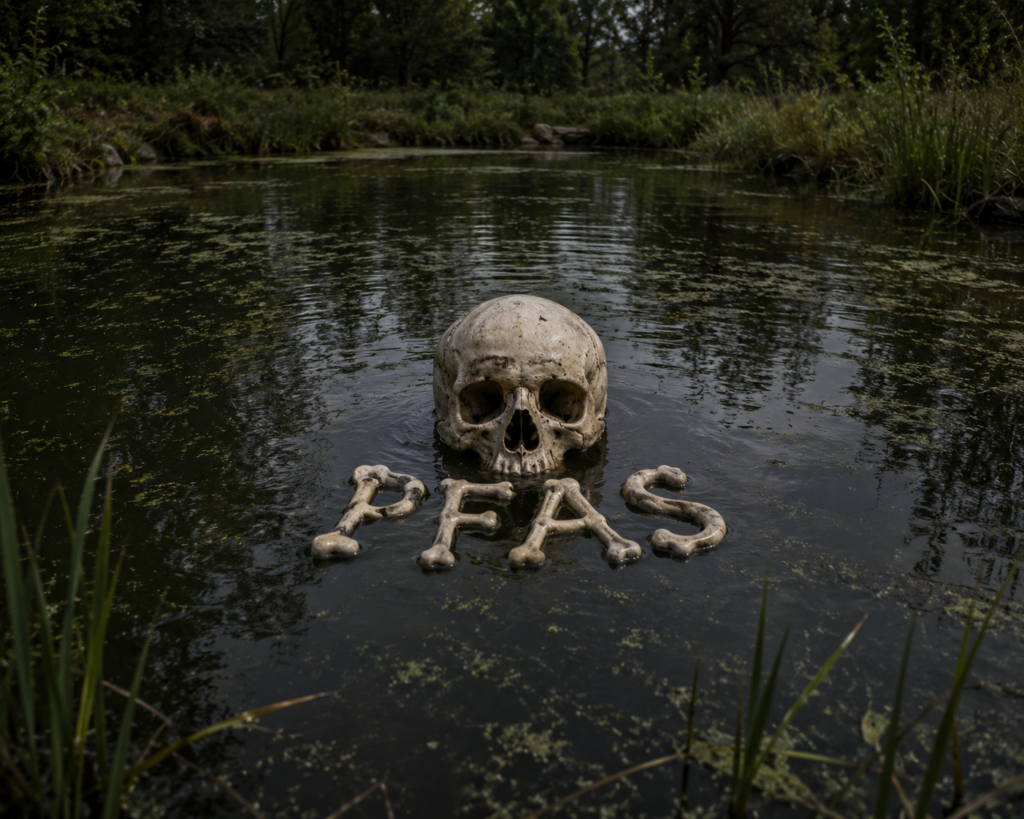
Dupont invented PFAS-rich Teflon in 1938 and released the product into the environment in 1940. By 1970 reaserchers knew that PFAS caused cancer. By supressing these findings industry was able to keep this secret until the later 1990s1
The central question, therefore, is not whether PFAS contamination is dangerous, but whether unilateral national restrictions are an effective solution to a fundamentally global problem.
I am not cheering on or minimizing PFAS contamination. Rather, I am stating what I believe is an uncomfortable but powerful truth: in many ways, our world may already be contaminated beyond what most people imagine. Our water, soil, and ecosystems have been exposed to persistent industrial chemicals for decades, and returning to a truly pristine state may no longer be realistic.
So, what is the takeaway?
The takeaway is this: we can no longer assume that turning on the tap automatically guarantees perfectly clean drinking water. Much of America’s water infrastructure was designed decades ago, long before PFAS contamination became a recognized public concern. While many utilities provide water that meets regulatory standards, emerging contaminants such as PFAS present new treatment challenges, often requiring advanced technologies such as activated carbon, ion exchange, or reverse osmosis.
The financial challenge is enormous. According to estimates cited by organizations such as Water.org and reporting from Governing Magazine, modernizing America’s aging water infrastructure could require investments measured in the hundreds of billions to more than a trillion dollars. That burden grows as infrastructure ages, populations shift, and new contaminants emerge.
It is also worth considering a difficult reality of modern chemistry: innovation moves faster than regulation. As we live and breathe, new industrial compounds are continually being developed, some of which may later prove harmful in ways we do not yet fully understand. Even as treatment technology advances, there is a reasonable argument that new contaminants may emerge faster than infrastructure can adapt, leaving us perpetually playing catch-up. For that reason, PFAS should serve as a wake-up call.
Safe drinking water can no longer be viewed solely as the responsibility of distant utilities or government agencies. Consumers may need to become more informed about water quality, chemistry, engineering, and biology. More importantly, many households may wish to consider point-of-use treatment systems—such as certified filtration technologies capable of reducing PFAS and other emerging contaminants—as an additional layer of protection. The larger lesson may be this: safeguarding our water will increasingly require both public investment and personal responsibility.